Search This Blog

Showing posts with label batman. Show all posts

Sunday, March 9, 2025

In a Gotham State of Mind


"How Gotham city conquered was

And how the folk turn'd apes- because."

-Linkum Fidelius, as portrayed by Washington Irving


"This town needs an enema!"

-The Joker, as portrayed by Jack Nicholson


When the world feels too large, it can be tempting to shrink it down. The onslaught of dispatches from its every corner can be overwhelming, and the enormity of the chaos unbearable. It's tempting to retreat into a city, especially a fictional one. Whether in a comic book, or a movie or TV series, these fictional landscapes have a familiarity that comforts us while simultaneously operating by different rules, being both home and a land far, far away at the same time. These places can be visited, regardless of their material reality. Cities like Gotham have their own spirit, being almost a character themselves in the tales set within them. These locales can act as a twisted funhouse mirror of our own hometowns, and while we might enjoy spending time watching a Caped Crusader win the day there, we are glad to be safe from the Rogue's Gallery on our respective couches. They stay in Gotham, in the fictional world, where they are Batman's problem. 

I had heard once, from a local historian, that my hometown of Worcester, Massachusetts, helped inspire the city of Gotham in the comics. I have never been able to verify this in any way, but it hasn't stopped me imagining a Bat Signal over downtown. Most would associate the DC Comics setting with New York City, as it is sometimes referred to as "Gotham". The name was first applied to New York by Washington Irving, under a pseudonym in his a satirical periodical called Salmagundi. It was his way of making fun of the city and its citizens, in reference to an English town of that same name. Dating back to the 1500s, stories were spun about the town and its eccentric residents culminating in The Merry Tales of the Mad Men of Gotham. There are several variations on the title; as madness is merely a matter of perspective, the folk of Gotham are also called "Wise Men". Accounts of their foolish activities include trying to drown an eel or send rent checks via hare to their landlords. They tried to build a hedge around a cuckoo, whose presence signified springtime, with the idea that keeping the bird captive would ensure endless warmth. When the bird escaped by flight from its roofless confines, they resolved to just build higher walls on their next attempt.


The motivation behind these apparent acts of lunacy is a strategic one. The tales were borne out of the same time period and location as those of Robin Hood, when everyone in England was taxed into poverty to subsidize wars elsewhere. A road had been planned, going through Gotham, for the King's use. At the time, the townsfolk would be responsible for the maintenance and financial burden of such a road, and feigned madness to make their home a less attractive choice. Madness was considered contagious at the time, and the wisdom of being "mad men" granted them some amount of sovereignty. It is interesting to consider how the social and political challenges of the era informed the tales of a resident vigilante and hero to the people, as well as an assortment of apparently deviant people within the greater Nottingham area. We can see also the corollary to the Gotham of the comics, its hero and its villains.

After the Mad or Wise Men, but prior to Batman, Chester Gould's Dick Tracy comics introduced outlandish outlaws and established the concept of a "Rogue's Gallery" working against the hero. Often the particular villains were distinguished and identified with some physical abnormality, like Pruneface with his dramatic wrinkles and Flat Top, who- you guessed it- had a flat top to his head. The memorable gangsters Dick Tracy fought undoubtedly influenced Bob Kane and Bill Finger as they developed their own Rogue's Gallery; Batman's antagonists upped the ante and became full-fledged supervillains, with flamboyant personalities and fantastical means of accomplishing their grandiose goals. Additionally, this creative admixture of influences probably had some element of true crime included, as well as depictions of organized crime in cinema. The drama was balanced with absurdity, though; villains like the Joker, the Riddler, and the Penguin were so weird and quirky that no one could reasonably worry we'd see anything like them in real life. The nonsensical elements kept the monsters trapped within the panels and pages of a comic book.


The feedback loop between what we think of as reality and our fiction, though, is more complicated in its effects and manifestations. In writing about the Joker in the past, I had referred to Richard Widmark's role as Tommy Udo in Kiss of Death as being tied to both the character of the Joker and that of the Riddler. It seems Widmark was at least in part inspired by the Joker character, and the unhinged Udo inspired Frank Gorshin in his portrayal of the Riddler in the 1960s Batman TV show. Meanwhile, in real life, a young mobster was similarly inspired in both his dress and sadistic tendencies after seeing the film noir classic. "Crazy Joe" Gallo is said to have started mimicking Udo early in his career as a mobster in New York, ultimately culminating in his demise violently at age 43. In the TV series Gotham, the infamous murder scene in which Udo, laughing maniacally, pushes a woman in a wheelchair down a flight of stairs is recreated with the Riddler as the murderer. More recently, the Riddler is depicted in The Batman (2022) as having shades of both the Zodiac Killer and the Unabomber to him. 


Meanwhile, since the writing of the aforementioned Joker post, the character has bizarrely been served up in the form of Arthur Fleck in Joker (2019) and Joker: Folie a Deux (2024). Having nothing to do with the Joker we know from the comics, TV shows, and movies, Fleck lives in a liminal Gotham between the one we know and 1970s NYC. The first movie seemed derivative of The King of Comedy (1982), even to the point of having a late night TV personality character, played by Robert De Niro. The second one, a jukebox musical with Lady Gaga as Harley Quinn, was trounced at the box office by Terrifier 3. The prevalence of clowns in an election year is worth noting, and Art the Clown and Fleck aren't the only examples- a documentary called From Darkness to Light was shown at festivals, examining Jerry Lewis's long lost movie The Day the Clown Cried- which involves a clown named Helmut, played by Lewis (who incidentally also starred in the aforementioned The King of Comedy) at a concentration camp. 

The proximity to evil, and politics with the clown energy is a running theme, and exemplified well by the fact that then-candidate Donald trump was facing trial not far from where the court scenes of Joker: Folie a Deux were being filmed. In one event, throngs of protesters, really just actors for the movie scene , nearly came into conflict with real life ones. Law enforcement was reasonably concerned such a protest might manifest in support of the felon who would later secure the election, and the confluence behind fake-Joker Fleck's mob and the hordes who blindly support trump is almost too obvious a point to belabor. An egregore of toxic cult mentality and discord existed in both the liminal Fleck Gotham and the New York of the present day simultaneously. By the end of the election cycle, the Insane Clown Posse were endorsing Harris for President.

Incidentally, if you want to hear me discuss the Joker sequel I do so here on John and Alexx Hate Stuff


Folie a Deux ends with (spoiler alert) what we presume to be the "real" Joker murdering Fleck, and carving a Glasgow smile into his face a la the Heath Ledger Joker from The Dark Knight. This reenforces the idea that the Joker exists as a mind virus more than as a singular personage. One might note Ledger's method acting in the movie was reportedly difficult for him to shake, leading some to speculate that it led to his death from prescription medication. Jared Leto, in his minor Joker role for the movie Suicide Squad, annoyed his fellow cast members by playing terrible pranks in the interest of "method". In 2012, during a showing of The Dark Knight Rises at a Colorado movie theater, a mentally ill gunman -reportedly inspired by the Joker- committed mass murder.  This "mind virus Joker" is explored in the series Gotham as well, which keeps you guessing about who the real Joker will turn out to be. In addition, it shows how this ephemeral Clown Prince inspired other killers. 

Gotham did perhaps the best job of amplifying the multifaceted villains of the eponymous city of any interpretation other than the comics themselves. The show managed to give audiences a little bit of all the different permutations of familiar characters, relying on every wacky trope from evil twins to literally raising killed-off characters from the dead. Far from the expected formula of origin stories leading to the hero or villain in action, we see the interactions and the effects they have on each person metamorphose over time. As the series progresses, we see Edward Nigma go through every variation on the Riddler, from the campy Gorshin-esque one to the Udo-esque killer. The series balances well the stakes of a drama with the absurd concatenations of comic book logic. It leaves up walls and dams of unreality between the micro world of Gotham City and the macro world in which we live, while more recent attempts detonate them- not unlike the Riddler in The Batman, flooding the streets with uncertainty and incredibly strange new challenges. 

The series also explored the Penguin more than virtually any other character. We see him as a young lackey to mobster Fish Mooney (invented for the show) working his way up through an increasingly bizarre series of misadventures, double crosses and incarnations. The trademark umbrella of the character is present, and part of his evolution into super villainy. Penguin, aka Oswald Cobblepot, traces his origins back to one of Dick Tracy's rogues- a character called Broadway Bates. The character was also partially inspired by a literal penguin in a Kool cigarette advertisement, which makes sense if you consider the traditional cigarette in a long-stemmed holder he is often portrayed having. The series touches on one told several ways in the character's long history- that of him running for mayor, which again adds to the political correlations. Versions of this were done in the 1960s series and in Batman Returns, where Danny DeVito's monstrous, sewer-dwelling version of the character is propped up through internecine city corruption and campaigning. Considering Gotham to be a small world mirror, the correlations to our world are again fairly obvious.


 The Penguin of The Batman, though, who got his own spin-off miniseries for HBO, is a different animal altogether. Colin Farrell's physical transformation for the role, from good looking actor to scarred and portly tough guy, deviates strongly from the rotund and goofy Penguin we're accustomed to. His Penguin seems like he would be more at home in an episode of The Sopranos than in Gotham. It's worth noting that Joachim Phoenix lost a lot of weight for Joker, undergoing perhaps a more extreme transformation. Whether either form of physical alteration was necessary is up for debate, but its interesting that the choices were made. Instead of finding actors who looked the part, the actors molded themselves into a strange new version of familiar characters. One might see it as a weird version of the well-loved "origin story" or "Joker moment" these villains are known for. It can also be seen as a strange way of humanizing them, bringing them ever-closer to our world which is bereft of Batmobiles and Bat Signals, and anything else with a "bat" prefix. Batman is even noticeably absent from The Penguin, and is in fact never even spoken about. The titular character's name is "Oz Cobb", getting away from the Golden Age goofiness of the traditional, longer alternate identity. He is kind of a middleman in Gotham's underworld, and his business is largely the drug trade. Gone are the poison tipped umbrellas that turn into helicopters somehow; no large rubber ducks or actual penguins equipped with rocket launchers are to be found. Entertaining though the series is, in the way that "binge-worthy" dramas are designed these days, it's eerily bereft of whimsy and most importantly, heroes. In the end, Oz / Penguin gets everything he wants through one important lesson- empathy is weakness, and having people you care about is a liability. Sound familiar?


What are we to take away from this melding of realities? Why is the fictional Gotham getting harder-edged, more dangerous, as the real world gets so cartoonishly stupid and hellish? Where are our heroes? If we shine a signal into the sky, who will come to our aid?

The Mad Men of Gotham were wise in knowing that madness isn't actually contagious, but using the fact that this was widely believed played the part. Madness is only contagious if you agree that it is, and allow yourself to contract it. The characters that fall prey to the Joker's mind virus were already inclined toward murder, and were just looking for an excuse- similarly the mobs aligned with trump, Musk, and their ilk long had hate in their hearts and are overjoyed to have permission to express it fully. The appointees being forced on us in this administration are like the super villains of the comics, more than the ones of the current media- they are singularly minded, obsessed with their own pet issues to rant about. The difference is, we've enabled and normalized these weird hills that these ghouls are willing to die on. Most of them are very, very dumb- or just crazy, and sadistic. Their only strength is having a ton of financial backing and an imperviousness to consequences because they refuse to play by the rules. You can't outsmart crazy and dumb, and, as Alfred Pennyworth said in The Dark Knight, some men just want to watch the world burn.

Such burning may be inevitable. It seems likely that it will get much worse before it gets better, but I for one am confident that the Rogue's Gallery hasn't won completely. Perhaps the burning will be purifying, all-encompassing; maybe we'll rise from the ashes and rebuild. I'll be watching the Worcester skyline for any signals, but I'm not holding my breath.


Saturday, February 11, 2023

Full of Hot Air- Ruminations on UFOs and those Numinous Balloons

 At the time I sat down to write this, news and social media had been all abuzz about a Chinese spy balloon seen floating across the country. It was, eventually, shot down. I was surprised to see just how many people on social media had become national security experts overnight, as it seemed everyone had ideas about what should be done. I'll admit that I don't know anything about spy balloons, or why on earth such low-tech espionage would be necessary in today's technological age- but the particular interest among the Disclosure set, and those on hashtag UFO Twitter, got me thinking about the symbolic nature of balloons and, more specifically, this symbolism in relation to the topic of UFOs. 

I was unable to finish writing this post the first time, and now, a week later, as I sit to complete it more objects have been shot down from both the U.S. and Canada...


My good friend, the right honorable Most Reverend StarDoG pointed out on Facebook:

You have to chortle at so many of those who are forever telling people that "People are losing their shit over a weather balloon and there's nothing strange here, please move on", currently, totally losing their shit over an actual weather balloon..

-Steve Mills, author of the blog post You're Just Like a Little Child Chasing a Balloon into the Sunset

The irony related to balloons runs deep in UFOlogy. "Weather balloon" is one of the classic hand-waving dismissals of UFO reports since the 1940s, alongside the planet Venus, misidentification of birds or known crafts, and Swamp Gas. Weather balloons and UFOs are inextricably linked, and as I intend to persuade you through my ramblings here, the symbol of all balloons hints at something existentially unsettling and as hard to capture through words as clouds are in one's hand. 

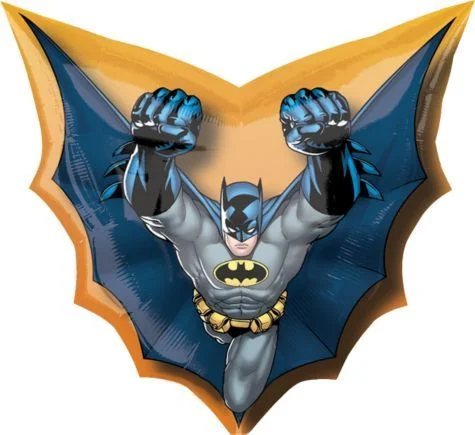
Back in 2020, a "leaked government photo" of a UFO, taken from inside a jet, was revealed to be remarkably similar in size and shape to that of a party balloon featuring DC Comics' Dark Knight, Batman. At the time, I found this profoundly amusing, and perhaps an indicator of the Cosmic Trickster at play. I had often felt that the extreme camps of those who engage with the Phenomenon, as it were, were exemplified by the Disclosure Set/TTSA mob, and fans of the documentary series Hellier. This dichotomy is often expressed as the "nuts and bolts" camp vs those open to a panoply of interpretations, bordering on the mystical and visionary. In cryptozoology, it might be the "flesh and blood" camp vs those open to supernatural answers for why we see Bigfoot and other beasties. In the interest of disclosure, although it's probably entirely obvious, I fall into the latter camp. The caveat is, I don't think either extreme at the exclusion of all evidence to contradict it is healthy. While I think chasing capital "D" Disclosure is a fool's errand, I also think there is a very real danger of missing the forest for the synchronici-trees.

A major part of Hellier, for those who haven't seen it, involves a blue star balloon that served as a synchronicity during the course of the investigation more than once. The balloon in question has become as emblematic of the Hellier goblin-hunt as the goblins themselves. In this sense, it seems amazingly on-brand for Trickster phenomena that the other extreme, who likely would not respond well to the language of high strangeness, to be taken in by a blue Batman balloon. 


In Tim Burton's 1989 movie Batman, balloons appear in the form of a dastardly plot perpetrated by the Joker. As he is throwing money out the people of Gotham, the floats above him are loaded with toxic gas that he hopes to unleash on the unsuspecting public. Of course he is foiled by the Caped Crusader, who flies in in his Batwing, towing the balloons to a safe distance from the city. This heroic act is mirrored later in the 2012 movie The Dark Knight Rises, in which Batman has to (we're led to believe) sacrifice himself in bringing a bomb out into the sea to save the city. 

The clown imagery and invitation to collect money in the scene, along with the hidden horror of the plot to poison Gotham, within a balloon, get at this odd symbolic quality of the unassuming and seemingly friendly object. A balloon might not be what it seems; is it a message from the cosmos, a whimsical decoration, a UFO, or a parade float filled with poison? Already, we can see that pinning down a straightforward meaning here is as evasive as the string of a free-floating balloon that has just left your grasp...Another relevant sinister clown / balloon connection is worth mentioning here- a single red balloon has also been a symbol of the character Pennywise in Stephen King's It.


The shape-shifting entity, most often portraying itself as a clown, is revealed to be (spoiler alert) a giant spider from either space or another dimension. The balloon sometimes acts as a harbinger of his appearances, or as a way to lure victims to their doom.

During World War II, balloons coming from Asia were a major concern for the United States, particularly along the Pacific Coast. Japan had released balloons loaded with incendiary devices, as a means of attacking the U.S. mainland. Balloons were also used during the war to distribute pamphlets of propaganda across enemy lines, or as a means of communication. All the while, phenomena such as "foo fighters" and ghost rockets were reported by airmen. After the war, the flying saucer age began with the publicity around the Kenneth Arnold sighting- but before the war, there were reports of mystery airships. Dirigibles, essentially piloted balloons, were reported throughout the country. 

These mysterious airships seemed to be just ahead of where commonly accepted technology would take us, but as zeppelins came into use they seemed less mystifying. They might have enjoyed greater use as a means of travel, had it not been for the widely publicized Hindenburg disaster in 1937. The words of the reporter covering the disaster - "Oh, the humanity!" have become ingrained and meme-ifed into public consciousness to this day. Public trust in airships dropped quickly following the crash.


The Hindenburg crash was featured as the cover art for Led Zeppelin's self-titled debut album, related to a joke spurred by the suggestion of a line-up of musicians in a band- that it would go over like "a lead balloon", or a "lead zeppelin". 

Years later, Pink Floyd would cause UFO reports of a sort with a botched album cover photo shoot. For their 1977 album Animals, the plan was to get a shot of a balloon shaped like an enormous pig floating above the Battersea Power Station. The pig balloon was custom made by a German company called Ballon Fabrik, who had previously constructed zeppelins. For the first attempt at getting a good photo, they had hired a marksman to shoot down the balloon if it became untethered. The second day, they failed to bring one, and it floated away...


The balloon eventually landed in a farmer's field, and he was reportedly furious that it had frightened his cows. Here we can see not only the UFO and balloon symbols merged together in one event, but also cows, which in popular media are often portrayed as victims of abduction. Beyond that, the likelihood of ever getting a straight answer with UFOs is so slight, it would seem that "when pigs fly" would be a reasonable expectation on when we'll have it figured out. On another, weirder level, Pink Floyd got their start playing at the UFO Club in London- which was managed by the co-founder of IT magazine Joe Boyd, who helped finance the recording of the band's first singles... right around the same time a newspaper article made the rounds in the U.S. about a police officer named Dale Spaur, who had taken to using the code name "Floyd" for a flying saucer he saw multiple times.


The imagery of a pig was part of the thematic lyrical structure of the Animals album- Roger Waters was drawing from Orwell's Animal Farm, a critique of Communism, but turning it on its head as a critique of capitalist, commercial society. He would later expand on the Orwellian themes in the later album The Wall, which was more inspired by the book 1984. 

In 1984, Nena's song 99 Luftballons was released in an English-language version to capitalize on the success of the original song in Europe. American audiences preferred the original German version over the translated 99 Red Balloons. Nena would express disapproval at the the translated version, as it seems the meaning gets lost in translation. The basic premise is that 99 balloons, tied together, are let go and float into a neighboring airspace and mistaken for UFOs. This leads to jets being scrambled, and using firepower, which builds up to a cataclysmic war that destroys the world. The anti-war song concludes with the discovery of a single balloon in the rubble, and the line "I think of you and let it go". 

The song was inspired in part by balloons let go during a concert in 1982, causing Nena's guitarist to wonder what would happen if they floated over the Berlin Wall. Also cited as inspiration for the lyrics was an apparent prank using balloons to hoax a UFO in Las Vegas, by students in 1973. It seems that there were several such hoaxes that year:

Balloons and hoaxing seem to go together well. In 2009, a flying saucer shaped balloon made the news when it was reported that there was a child trapped inside. The "Balloon Boy" hoax was characterized as a ploy for publicity and attention from the couple who launched the balloon, Richard and Mayumi Heene. To this day, they and their son who they originally claimed was in the balloon maintain that it was not a hoax, but a mistake. Another example of a balloon based saucer hoax occurred in 1989, when rich guy with too much time on his hands Richard Branson spooked motorists in the U.K.:


Sometimes, though, balloons are just a means of adventure, whimsy, and fantasy. Take for an example the sky journey of Kent Couch in 2008. The 48-year-old owner of a gas station rigged up a bunch of balloons to a lawn chair and spent 9 hours aloft, covering a distance of 235 miles from his starting point in Oregon. Using a BB gun to take out balloons and lower himself when necessary, he landed safely in Idaho. "I think most guys look up in the sky and wish they could ride on a cloud.", Couch said in an interview.


As I type this all out, it does seem eerily likely that tensions are mounting around balloons from across the Pacific. I certainly hope nothing like the 99 Luftballons scenario plays out, and I would hope that we can all move toward a more adventurous and whimsical view of balloons like that shown by Kent Couch, or as utilized in the Pixar movie Up. We do seem to be living in an increasingly crazy world, a place where alien craft making an undeniable appearance seems more likely; but on a scarier note, with a recent pandemic, climate and weather changes, and political tensions high all around, it's easy to feel like we're on the precipice of a great change. What that change is, and whether good or bad, is as hard to determine as the motives of a balloon drifting across the pacific ocean. This brings me to one final balloon image culled from pop culture- the balloon to take us home. And if you've made it this far through my ramblings, I really can't thank you enough.


At the end of The Wizard of Oz, the all-powerful Wizard has a solution for Dorothy. The plan to bring her and Toto back to Kansas involves getting into a hot-air balloon, but at the last moment, as the balloon is taking off, Toto jumps out. Dorothy has to go running after him, as her only hope for getting home appears to drift off above the Emerald City. It's then that she learns the power to bring her back was with her the whole time; and maybe that's the lesson with balloons. Maybe, perhaps, as Nena sang, we should think of each other and let it go. Maybe chasing balloons equates with madness, and certainly there's danger in it. Maybe I'm crazy for ruminating so long on the topic, and bringing up such far-flung images to illustrate the nebulousness that is UFOlogy. I'm sure it could be argued that I am, indeed, full of hot air, high on my own supply... but like many other guys, I just want to know what it's like to ride a cloud.


Monday, April 29, 2019

Clowns to the Left of Me, Joker to the Right...

It's been a weird week, here at the headquarters of your humble Aficionado. I set out to write a nice little analysis of the Joker, of Batman comics fame, and got a bit sidetracked down a rabbit hole of research on the broad subject of clowns... it seems I opened a portal to the Clown Realm, inadvertently. Allow me to explain...

Firstly, I should establish here my personal thoughts on clowns. Growing up, I thought that coulrophobia was equal parts people who joked about fear of clowns, and people who were scarred by the TV miniseries It and its monstrous demon clown Pennywise. I never could relate to the fear of, or even the creep factor of clowns. To me, they're funny; a bit corny and outdated perhaps, but then again so am I. I have a fair amount of cartoons and art that I've drawn featuring clowns, and I'm sometimes dismayed when people think they're creepy. I have great respect for proper clowning as an art form, so if any clowns are reading this - I give you a 21 bicycle horn salute!

That being said, I set out to write about Joker, in anticipation of the anniversary of his first appearance in Batman #1 back in 1940. This triggered the idea for another post about the science behind creepiness with some Phantom Clowns thrown in for good measure. In the process I noticed a few clown synchronicities that I joked about on my Twitter account. Then they started to pile up... I wondered briefly if I should bother writing about this here on the blog late last night, and got an answer from the Clown Realm:
*sigh* Here goes nothing...

I started noticing odd coincidences in doing the research, in conjunction with the #OnThisDay posts I'm fond of doing on Twitter. Jack Nicholson (Joker in Batman, 1989) celebrated a birthday on the first day of really digging into the writing, April 22nd. April 23rd was the birthday of Ruggero Leoncavallo, the man behind the opera Pagliacci - which I was incorporating into a character analysis of the Clown Prince of Crime. On a whim, my creepiness entry included a picture of the creepiest smile I could think of - that of Mr. Sardonicus, the title character of a film by Gimmick King and thriller movie maker William Castle - and then found out Castle's birthday was April 24th.

On the 24th I had a moment of metaphysical hilarity in the form of greeting a woman at her place of work, only to have her ask - without glancing up from her smartphone - "Do you know where I could buy a clown car that leaves a trail of bubbles behind it?" I was a bit bewildered at first, and made sure she was actually talking about an actual clown car. I'm happy to say I think I managed to point her in the right direction, accomplishing my weird deed for the day.

My day-to-day life involves a lot of driving around, so I always make sure I have podcasts to listen to. One day last week, the episode of Aeon Byte Gnostic Radio that I was listening to ended with a discussion about world politics and this phrase - "Clowns run the world". The next day, I was listening to something a little less weird - WTF? with Marc Maron. Wouldn't you know it, during the opening neurotic rambling customary for his program, he read a fan letter - from a clown. The fan went into detail about the therapeutic benefits of Theatrical Clowning. Meanwhile I was in my truck saying to no one in particular "You've GOT to be kidding me!"

It didn't stop there, either, but it did seem to wind down a bit. The whole thing reminded me of an article I had read in an old issue of Fortean Times, by Bob Tarte and Bill Holm *, recounting his year of misadventure being plagued by synchronicity involving a clown named Bobo and the number 22. This sadly doesn't exist online anywhere where I can find it, but parts of it are included here for your perusal. Mr Tarte dealt with the nefarious and enigmatic Bobo for a full year - here's hoping I can avoid this fate and close the clown portal with this blog entry! Conspicuous is the fact that my first observed clown coincidence occurred on Nicholson's birthday - April 22nd...

Friday I went to the X-Filers United! Conference in Warwick, RI, and checked out Greg and Dana Newkirk's Traveling Museum of the Paranormal & Occult. Greg and Dana are every bit as cool as I suspected they'd be; very welcoming, kind, and easy going. I was thrilled to meet them!
I was so thrilled to hang with them that ectoplasm blew out of my left ear. A little embarrassing, but these things happen I suppose...
I mentioned my clown synchronicities to them, for which I immediately felt a bit sheepish. But like I said, they're cool as Hell, and didn't seem to mind me continually coming back to linger at their museum and casually chat with them! The reason I mention any of this is that their collection included two items which caught my eye right away...


Each clown seemed to have a terrifying entity attached to it. Smiley, up top, terrorized college students with its attached "Dog-Eyed Humanoid" that would come out at night... While the clown below was found in a Chicago basement, wrapped in a picture of itself - this one seemed to make some skeletal creature that made cracking and popping noises manifest... Creepy stuff, indeed!

The traveling museum is really quite a wonderful collection of oddities and is worth going out of your way for. Every item inside was fascinating and wonderful. I spent a bit of time with a black scrying mirror, and was relieved that my reflection hadn't grown a clown nose...

That brings me to the weekend - of course I told my son about my clown troubles, which he found hilarious. Saturday afternoon the two of us were chatting with my mother through video chat, when she spontaneously put her phone down - only to pick it up again, surprising me by her and my dad wearing clown noses. Uncanny.

I also realized I had missed the series finale of the TV series Gotham, which aired on April 25th. I'm not sure if it was intentional on the part of the writers and producers of the show, but I suspect it was - that's the date of the anniversary of Joker's first appearance, the thing I set out to research and write about to begin with. And, fittingly enough, the episode - "The Beginning..." - revealed the Joker as we know and love him toward the end.

So now that this is all out there for the whole wide internet to chew on, hopefully these clowns can pile back into their phantom clown car and hit that cosmic freeway back to the Clown Realm from whence they came. I can close the Clown Portal and move forward, and write about something else next week. Anything else. Clowns never creeped me out before, but I gotta say they've been trying real hard this week!
Pictured: Clown College Drop-Out
* Bob Tarte has reached out to correct me on the attribution of his authorship of the article "A Circle of Clowns" from Fortean Times. He co-authored it with Bill Holm, who he says did the bulk of the writing. Weirdly enough, Holm also shared a birthday with Jack Nicholson - April 22nd! Bob is a real nice guy and the author of books such as Enslaved by Ducks and Kitty Cornered. Go check them out!

Thursday, April 25, 2019

The Joker's World

The original Joker - Batman #1, 1940
This year saw the 80th anniversary of the first appearance of Batman, published March 30, 1939 in Detective Comics #27. Following right behind old Bats was the Clown Prince who would become his nemesis - The Joker first appeared the following year in Batman #1, published April 25, 1940. As villains go, you'd be hard pressed to find many as iconic and long-lived as the killer clown of Gotham - from his debut 79 years ago in which he was almost killed off to the upcoming feature film about him to be released in October, the Joker has been a pop cultural boogeyman who borders on the archetypal. This history is worth investigating, if only to give me an opportunity to be a fanboy for while.

One of the eeriest aspects of the Joker is conspicuous lack of information about him - although several backstories and identities have been devised for the character, it's much scarier and more fitting to his legacy that these remain potential origin stories, not definitive ones. In keeping with the multiplicity of the rogue's possible origins within the fictional world of DC Comics, the origin of and development of the character in pen and ink is ambiguous as well. For starters, up until recent years credit for Batman and associated characters had always gone solely to comic artist and writer Bob Kane; It's clear now that the development of Batman (and Joker) as we know them owe much to the contributions of writer Bill Finger, who now gets credited as a creator. One version of events has Finger and Jerry Robinson coming up with the iconic villain based on the picture of a jester on a joker playing card, while Kane maintained that he had been inspired to create a character by the terrifying visage of Conrad Veidt in the 1928 silent film The Man Who Laughs.
The Man Who Laughs is based on the novel by Victor Hugo, which features a carnival performer named Gwynplaine with a face disfigured into a permanent grin. It seems to be one of many tragic clown stories that were popular in the 19th century - it seems that when Ruggero Leoncavallo rose to notoriety with his opera Pagliacci he was sued for plagiarism by French author Catulle Mendes, who felt that the opera was too close to his story La Femme de Tabarin. He dropped his case when his play was compared with an earlier work by Don Manuel Tamayo y Baus. There's nothing new under the sun, I suppose, but the prevalence of dark tragic clown stories in the late 1800s is surprising to say the least. For Leoncavallo's part, he claimed ignorance to the works of Tamayo y Baus and Mendes, and claimed Pagliacci was based on a real murder. Whatever the case, it's an enduring opera that spawned films just as Hugo's grinning clown did - Notably Lon Chaney's eerie clown in the 1924 film Laugh, Clown, Laugh. That was Chaney's second clown performance - he was also a clown in the movie He Who Gets Slapped, based on a Russian play by Leonid Andrejev. It seems all around the world, clowns with violent and tragic backgrounds provide compelling stories, down through the ages...

The Joker in Batman stories is often portrayed in a similar way. One of the most iconic and controversial Joker tales is The Killing Joke, by Alan Moore and Brian Bolland. In it, the back story of the Joker is revealed - the Joker is a small time comedian who can barely pay the bills, with a wife and a baby on the way. One very bad day involving a heist in which he plays the part of the Red Hood, along with the death of his wife and unborn child culminates in his transformation into the clown prince of evil. This hearkens back to a 1951 origin story for the Joker reveals him to have been the Red Hood, planning to steal from the Ace Chemical plant but being foiled by Batman and falling into a chemical vat, which bleaches his skin and colors his hair green. The chemical bath is a consistent theme in the Joker backstory, memorably portrayed in 1989's Batman with Jack Nicholson in the role. Ultimately, any backstory given for the Joker is considered just a possibility "manifesting itself in his fevered brain", as Bolland put it in his afterword to the Deluxe Edition of The Killing Joke.

It seems the pale face, the grin, and the madness in clowning has all the hallmarks of menace. I covered this bit already as a lead-up to writing this analysis of the Joker - but it's interesting to note that all of the characteristics of clowns that the average person finds unsettling, the Joker has in spades. He's chaos and mayhem incarnate, an unpredictable, mysterious, and psychotic fiend who's seemingly capable of anything, as long as it amuses him. This is illustrated particularly well in one single panel of the Neil Gaiman and Andy Kubert story Batman: Whatever Happened to the Caped Crusader?
Also interesting to note is the fact that while he may have been inspired by Conrad Veidt's Gwynplaine in The Man Who Laughs, he has a distinctive gangster flair that makes him stand apart from tragic misunderstood European clowns of earlier times. That is, he may actually have been inspired by a simple jester image on a playing card - the Joker card, which is distinctly American. While playing cards trace their history back hundreds of years to China, then appearing in Europe in the 1300s, the addition of the jokers in the deck developed much later, during the American Civil War. In the game of Eucre, a game of trick card taking, an additional trump card or "Best Bower" was required - hence, the addition of the two cards to be used as wild cards. The American flavor of character traits displayed by the Joker is intrinsic to his personality and psychosis; the origin of the card seems a fitting allegory.

The earliest versions of the villain in Batman comics were violent and dark - the Joker was a homicidal maniac from the start. At the dawn of the Silver Age of comics, however, the violence had to be toned down considerably creating the more cartoonish, relatively harmless prankster version. Richard Widmark's performance as Tommy Udo in the 1947 film Kiss of Death is often compared to the Joker, and is not far from how the early Joker might have behaved. Uncited Wikipedia sources claim that Widmark based his character on the comic book Joker, and that Frank Gorshin based his 60s Riddler character on Widmark's Tommy Udo. Interesting, if true...
Of course, by the 1960s when the Batman series hit the air the Silver Age Joker was the standard. Cesar Romero's madcap adversary to Adam West and Burt Ward's Dynamic Duo was flamboyant, diabolical and entertaining - but certainly lighter fare than the killer of Batman #1. This "Theater of the Absurd" approach to the Gotham Rogue's Gallery is a particularly weird and wonderful one, as much as it may be dismissed by fans of the cerebral and terrifying Heath Ledger version from The Dark Knight. The aforementioned 1989 version, directed by Tim Burton, had Jack Nicholson needling between these two poles. He was certainly homicidal, but he was also pretty colorful and fun. Unpredictable and dangerous in the way only Jack Nicholson could be, 1989 Joker is the mean approximation of the sum total of the Joker's character. Nicholson said that the Joker "should have a humorous dark side to him", and that it was a part that he always thought he should play. This was in response to the Ledger Joker - Heath Ledger's final acting role, Jack seemed to find it heavy handed and too serious. I like both, honestly, for their own reasons. And of course I'd be remiss if I didn't mention Mark Hamill's voice-over work for the animated versions of the Joker, without which we wouldn't have the criminal's partner in crime Harley Quinn.

Worth noting as well are the Jokers that never were - apparently, Frank Sinatra had expressed interest in the role for the 60s TV series and was crushed that Romero beat him to it. As far as the '89 Joker goes, contenders for the role included David Bowie, Tim Curry, and Robin Williams. Williams was reportedly offered the role only to have it taken away and given to Nicholson, which upset him badly enough that he refused the role of the Riddler years later.

So there you have it - a good long look at an iconic bad guy, a clown who can creep with the best of them and the number one contender for the Caped Crusader. Happy 79th Birthday, you big weirdo.